Event photography sounds simple. Show up, take photos, upload, done!
But there’s a lot that goes into professional event photography that you don’t necessarily see. You see me walking around the room with a camera, but what you’re actually hiring me to do is pay attention.
While you’re talking to guests, keeping the program on schedule, dealing with the caterer, checking on the speaker, thanking sponsors, and doing 47 other things, I’m watching for the moments and details you don’t have time to watch for.
I’m making sure your guests look good, the room looks inviting, and all the work you put into your event actually gets documented.
Whether I’m photographing a business luncheon in Burlington, a grand opening in Mebane, a corporate event in Durham, or a nonprofit fundraiser in Greensboro, there’s a lot happening before I ever press the shutter.
Event Photography Starts Before the Event
I show up early.
Usually, I’m there at least 15 minutes before my scheduled coverage begins so I can connect with my contact, grab an up-to-date program, and take a look around.
Where’s the best light?
Where are the speakers going to stand?
Where can I move without blocking the audience?
Are there any weird angles, dark corners, giant windows, exit signs, projector screens, or other potential problems I need to know about before the room fills up?
If there’s a videographer, I also want to know where they’ll be working. Neither of us wants me wandering through the middle of their shot during the keynote.
A little preparation gives me a much better chance of being in the right place when something important happens.
The Little Details Matter
Before most guests arrive, I’m photographing the details.
The signage. The decor. The food. Sponsor logos. Programs. Name tags. Awards. Table settings.
All the little things your organization put thought into but might not think to photograph.
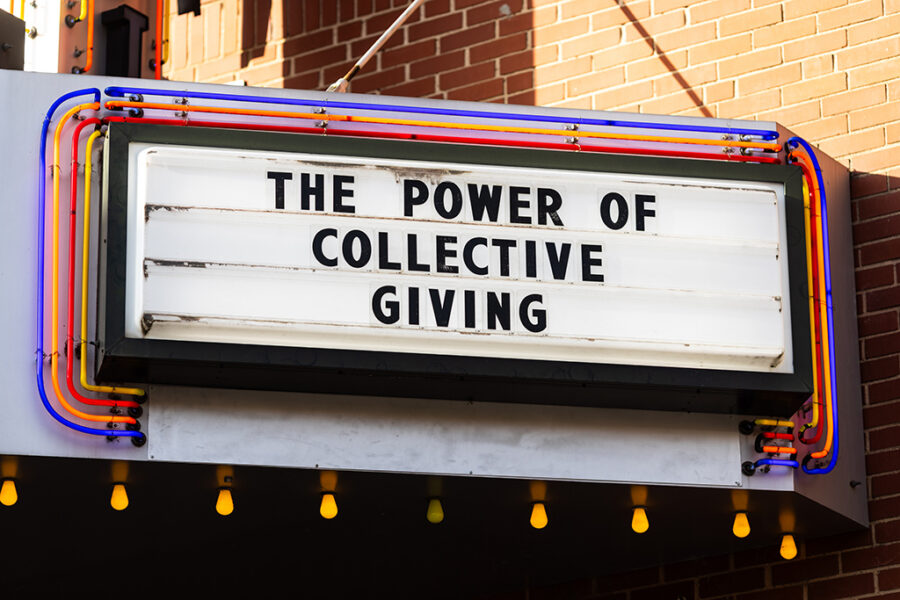
Sometimes I’ll move something a few inches to catch better light. Sometimes I’ll photograph the same detail from two or three different angles.
These might not seem like the most important photographs while the event is happening, but they become incredibly useful later.
When you’re thanking a sponsor next week, updating your website next month, or promoting next year’s event six months from now, suddenly that photograph of the sponsor signage is exactly what you need.
Then the People Arrive
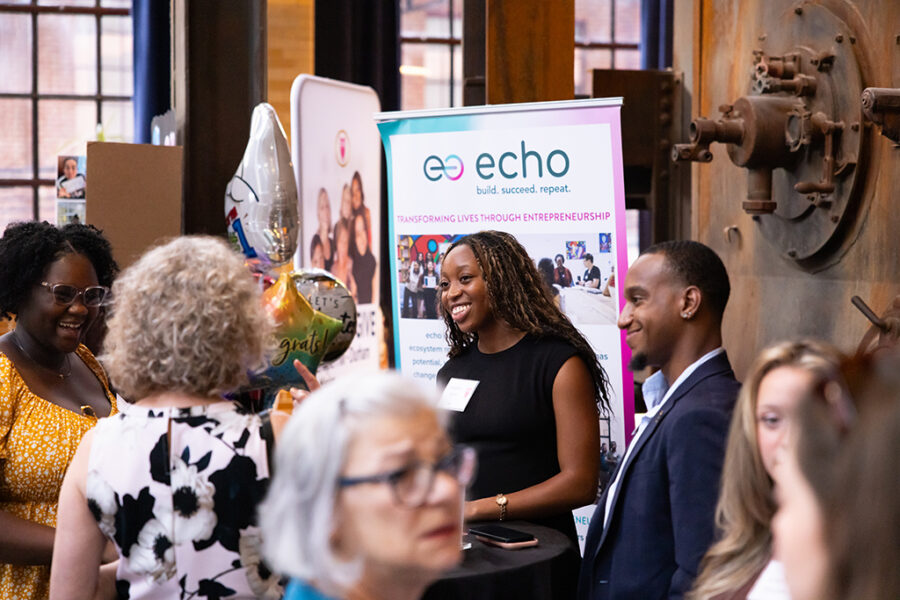
This is when my head goes on a swivel.
Of course I’m photographing the obvious things, like your volunteers or staff checking people in.
But I’m also watching the rest of the room.
The handshake.
The hug between two people who haven’t seen each other in months.
The table that erupts in laughter.
The person listening intently to a conversation.
The board member welcoming a first-time attendee.
Those interactions are what make an event look like somewhere people actually want to be.
The trick is anticipating them before they happen.
I don’t want to point my camera at someone for so long that they notice me, become self-conscious, and suddenly forget how humans normally stand.
I want to capture the interaction and move on.
How Many Ways Can You Photograph Someone at a Podium?
Then the speaker takes the stage and my brain starts thinking:
“Okay… how many different ways can I photograph a person standing at a podium?”
More than you’d think.
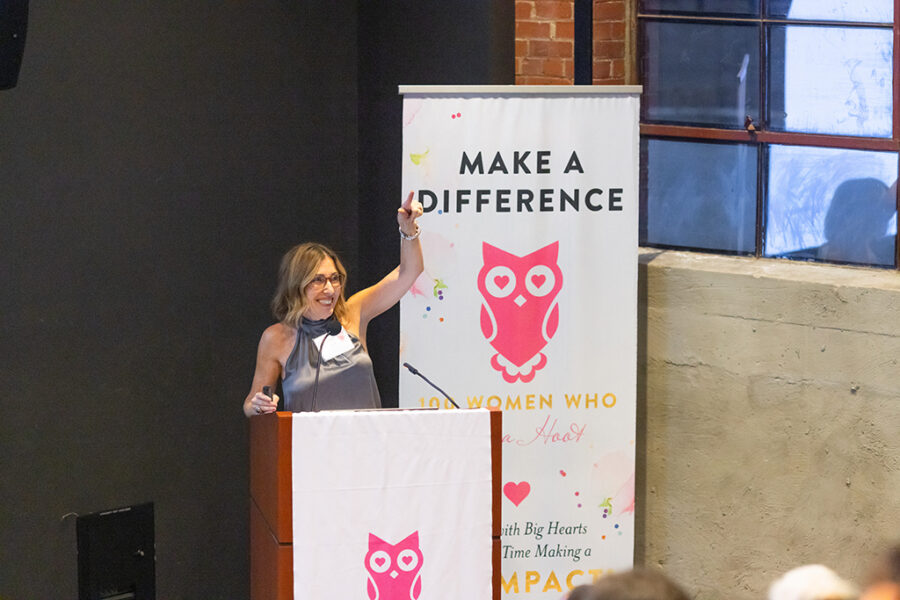
I’m changing angles and looking for variety. I’m getting close-ups of the speaker, wider photographs that establish the room, images that include the audience, and reactions from the people listening.
I’m waiting for the speaker to look up from their notes.
I’m watching for a laugh, a smile, a big gesture, or an expression that helps communicate what was happening at that moment.
Meanwhile, I’m keeping track of where the videographer is, trying not to block anyone’s view for more than a couple of seconds, and taking several photographs of important moments because expressions can change in a fraction of a second.
Then the Event Ends. My Job Doesn’t.
A recent event I photographed was two hours long.
I took more than 1,000 photos.
You absolutely do not want me to hand you 1,000 photos.
So I go through them.
First, I eliminate anything that doesn’t meet my technical standards. Then it gets harder.
I’m comparing similar images side by side and choosing the photograph with the best expression, composition, and moment.
And I’m not just looking at the main person in the photograph.
I’m looking at everybody.
I will not knowingly let an image leave my computer with an expression I wouldn’t want to see on my own face. Nobody wants to open LinkedIn or Facebook the next morning and discover they were photographed mid-bite or mid-blink in the background.
Those 1,000+ photographs eventually became a much more useful gallery of 275 images.
Event Photos Still Need Editing
Event photography doesn’t receive the same full retouching that my portrait work does, but every delivered photograph still needs some polish.
I refine crops, adjust brightness, correct color when needed, and make sure the images throughout the gallery look consistent.
For that two-hour event, I spent another 2.5 hours sorting, editing, preparing, and uploading the finished photographs.
The organization had its gallery ready to use for its recap post the next day.
That’s four and a half hours of work behind two hours of event photography.
What Can You Use Professional Event Photos For?
The end result isn’t simply proof that your event happened.
A strong event gallery gives your organization a library of photographs you can continue using long after everyone goes home.
Use them for your recap post. Thank and tag your sponsors. Send photographs to your speakers. Update your website. Include them in newsletters and annual reports. Share them on social media. Promote next year’s event. Show prospective members, clients, donors, or attendees what being part of your organization actually looks like.
Instead of trying to explain that your events are welcoming, active, well-attended, or worth participating in, you have photographs that show it.

What Kinds of Events Do I Photograph?
Event photography can be useful for much more than large conferences and formal galas.
Katie Smith Photography provides photography for businesses, nonprofits, professional organizations, municipalities, schools, and community organizations for events including:
- Corporate events and company celebrations
- Groundbreaking ceremonies
- Grand openings and ribbon cuttings
- Business luncheons and networking events
- Seminars and workshops
- Symposiums and conferences
- Fundraisers and nonprofit events
- Festivals and community events
- Award ceremonies and recognition events
- Speaker presentations and panel discussions
- Receptions and open houses
- Professional association events
- Employee and client appreciation events
- Retreats and company gatherings
Coverage can focus on the overall event, or we can talk ahead of time about specific priorities such as sponsors, speakers, VIPs, community leaders, staff, branding, networking, or candid interactions.
Event Photography From the Triangle to the Triad
Katie Smith Photography is based in Mebane, North Carolina and provides professional event photography from the Triangle to the Triad, including Burlington, Graham, Hillsborough, Durham, Chapel Hill, Greensboro and surrounding areas.
Whether you’re planning a 30-person business luncheon or a large community festival, my job is the same: pay attention to what’s happening while you’re busy making it happen.
You take care of the event.
I’ll make sure you have the photos to keep telling its story after it’s over.